
Mole Check and Mapping
A mole check is a non-invasive examination in which moles are magnified with a dermatoscope and, when needed, digitally recorded and compared over time. The aim is to spot changing or suspicious lesions early.
Treatments3 treatments
 3 treatments
A mole check is a non-invasive examination in which moles are magnified with a dermatoscope and, when needed, digitally recorded and compared over time. The aim is to spot changing or suspicious lesions early.
Surgical mole removal means removing a mole under local anaesthetic with a thin margin of healthy skin and sending it for pathology. It confirms the diagnosis of a suspicious mole.
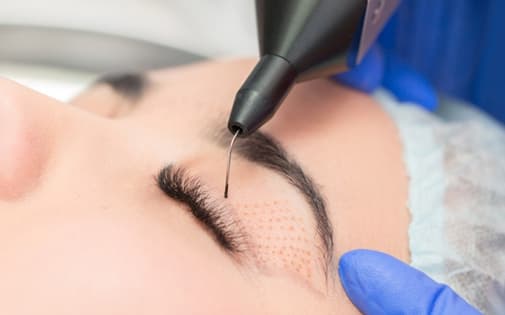
Plasma mole removal uses a small plasma arc from a pen-like device to vaporise small, benign lesions in the upper layers of the skin. It is used only on lesions a dermatologist has confirmed as benign.
Overview
Most moles are benign and never cause problems. Still, deciding which moles simply need watching, which should be removed and, if so, which method is appropriate is a decision made after an examination. In mole treatment the order is always the same: diagnosis first, then the method.
A mole check with digital mapping is the first step. Moles are examined with dermoscopy, recorded digitally when needed and compared at later visits. Moles that look suspicious or need a definite diagnosis are removed by surgical mole removal and sent for pathology. For some superficial lesions judged benign at examination, stitch-free options such as plasma treatment can be discussed.
Checking your own skin once a month and showing any new or changing mole without delay is the most important part of early detection. Mole removal creams and home devices sold online are not recommended, as they can delay the diagnosis of a suspicious mole.
At our clinic in Çankaya, Ankara, we assess your moles and put together a follow-up or treatment plan that matches your risk.
Mole Treatment
Common questions about Mole Treatment, with short answers.
Moles that are asymmetrical, have irregular borders, several colours, a diameter above 6 mm, or that change in size, shape or colour should be checked. A mole that looks different from all your others also deserves attention. These features do not mean cancer, but they do need a dermatologist's assessment.
Mole Check and MappingNo. A mole removed properly by a doctor does not cause cancer or worsen an existing condition. The real risk is leaving a suspicious mole unchecked or having it destroyed in a way that prevents examination.
Surgical Mole RemovalFor superficial lesions the risk is generally low, but not zero. Temporary darkening, a pale spot or occasionally a small scar can remain. Leaving the crust alone and protecting the area from the sun reduce the risk.
Plasma Mole RemovalHave another question?
You can ask us about visits and treatments by phone or on WhatsApp.
Message us on WhatsAppTreatments




Çankaya, Ankara